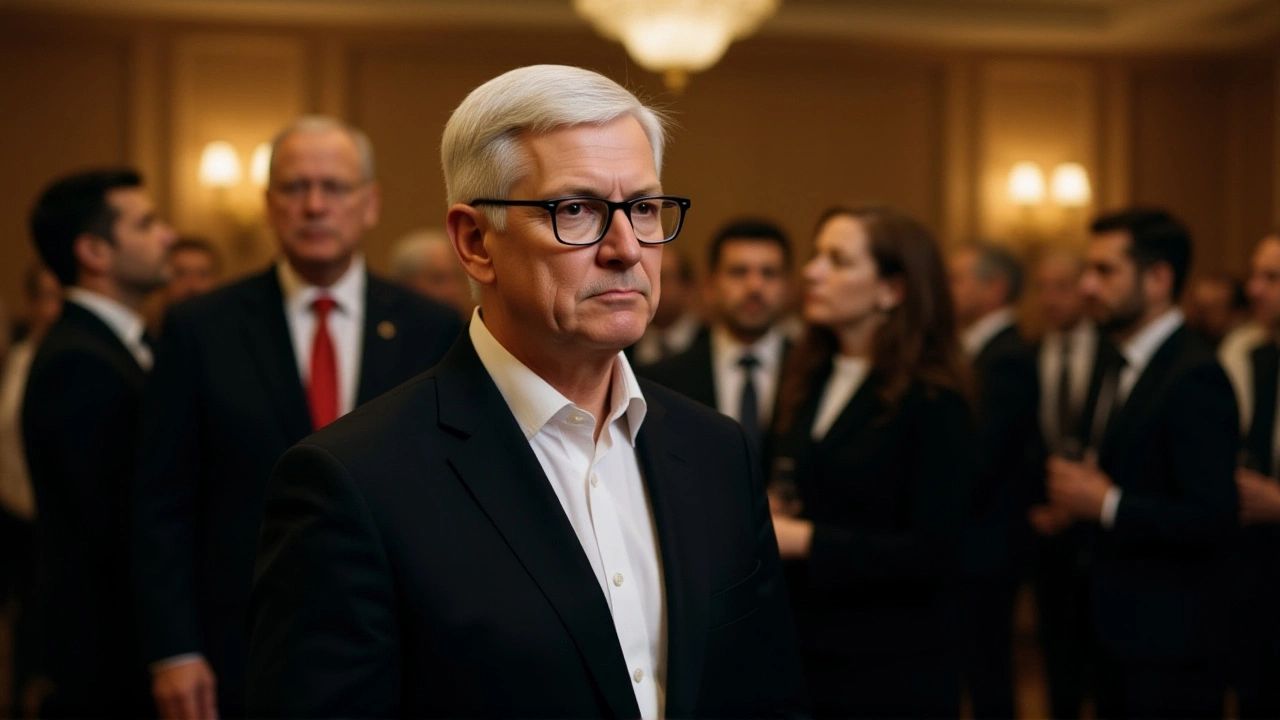
When John Ternus stepped onto the stage at Apple’s September 2025 developer keynote to introduce the iPhone Air—the company’s thinnest iPhone ever—he didn’t just unveil hardware. He signaled something deeper: a quiet, deliberate preparation for the most important leadership transition in Apple’s history. At 50, Ternus, Apple’s Senior Vice President of Hardware Engineering, has become the most visible heir apparent to Tim Cook, the 65-year-old CEO who’s led the company since 2011. With Cook’s retirement looming and no official announcement yet, insiders say the board is racing to finalize a plan that could reshape Apple’s next decade.
The Quiet Architect of Apple’s Hardware Revolution
Ternus joined Apple in 2001, long before the iPhone existed, and spent years working in obscure corners of the company’s engineering division. He didn’t rise through marketing or finance—he climbed through silicon. Since 2013, he’s overseen every major hardware product: the iPhone, iPad, Mac, AirPods, and even the Vision Pro. His fingerprints are all over Apple’s most consequential shift in a generation: the move from Intel chips to Apple Silicon. That transition, completed in 2021, didn’t just improve performance—it gave Apple control over its entire tech stack. And Ternus was the man who made it happen.What sets him apart isn’t just technical skill. It’s presence. Unlike other executives who fade into the background, Ternus has increasingly taken center stage. He introduced the iPhone Air. He appeared in interviews alongside Cook. He sat front row at the London Apple Store launch. And according to the Times of India’s November 16, 2025 report, he recently presented Apple’s entire five-year technology roadmap alone—an act previously reserved for Cook himself. That’s not a coincidence. It’s rehearsal.
The Other Contenders—and Why They’re Not the Front-Runner
The other three candidates are formidable. Craig Federighi, SVP of Software Engineering, is the voice behind iOS and macOS—charismatic, witty, and beloved by developers. Eddy Cue, who runs Services, helped turn Apple into a $80 billion-a-year subscription business with Apple Music, iCloud, and Apple TV+. And Greg "Joz" Joswiak, SVP of Worldwide Marketing, is the mastermind behind the iPhone’s cult-like appeal and product positioning.But here’s the thing: Apple isn’t just looking for a manager. It’s looking for a builder. And right now, the world is waiting for the next computing platform. AI. Mixed reality. Even autonomous systems. Cook’s legacy is scaling—growing the iPhone from 20 million units to 200 million annually, turning Apple into a $4 trillion company. But innovation? That’s been harder. The Watch, AirPods, and Vision Pro were hits, yes. But none have defined a new category the way the iPhone did. Analysts at JPMorgan put it bluntly: "Elevating a product-focused leader like Ternus would be seen as a sign of further emphasis on innovation."
Meanwhile, Jeff Williams, Apple’s long-time COO and the presumed backup, is retiring. That wasn’t just a personal decision—it was a signal. As Twit.tv noted on November 16, 2025, "Apple is moving on to the next phase of leadership planning." And that phase doesn’t include Williams.

Timing Matters: Why Early 2026 Is the Key Window
The Financial Times reported on September 14, 2025, that Apple’s board wants to name a successor before the June 2026 Worldwide Developers Conference. Why? So the new CEO can own the narrative. Announce new AI features. Introduce a new product category. Walk out on stage with the same confidence Cook once had. A January 2026 earnings call is too early—too quiet. Too internal. The real stage is June, and then again in September with the iPhone launch.That’s why Ternus’s age is a strategic advantage. At 50, he’s the same age Cook was when he took over. That gives him at least a decade—possibly two—to steer Apple through its next transformation. And that’s exactly what the board wants: stability, not a stopgap.
The Weight of a $4 Trillion Legacy
Let’s not pretend this is easy. Cook inherited a company worth under $400 billion. He turned it into the most valuable on Earth. He did it by perfecting execution, not reinvention. Now, the next CEO inherits a company that’s running out of easy wins. Android is catching up on AI. Samsung is pushing foldables. Google and Microsoft are building AI agents that could bypass iOS entirely. Apple’s services growth is slowing. The Vision Pro hasn’t taken off like the Watch did."Whoever gets Cook’s job is inheriting a company at a really tricky moment," wrote the Times of India on November 16, 2025. And they’re right. Ternus doesn’t just need to lead Apple. He needs to redefine it. He’ll have to make bold bets on AI-powered hardware, maybe even new form factors. He’ll need to convince engineers to build things that might fail. That’s not Cook’s strength. It’s Ternus’s.
What Comes Next?
Don’t expect a surprise. Apple doesn’t do surprises. The board has been planning this for years. The most likely timeline: a quiet internal announcement in late January or early February 2026, followed by a public unveiling at WWDC in June. Ternus won’t be handed the keys—he’ll be asked to prove he can drive the car.And if he does? Apple’s next chapter won’t be about scaling. It’ll be about daring again.
Frequently Asked Questions
Why is John Ternus considered the strongest candidate for CEO?
Ternus is the only candidate who has directly led Apple’s most critical product innovations—especially the shift to Apple Silicon and the design of flagship devices like the iPhone, Mac, and Vision Pro. His growing public visibility, combined with JPMorgan and Financial Times labeling him the "most likely successor," signals deep board confidence. Unlike marketing or services leaders, he controls the hardware foundation Apple needs to compete in AI-driven computing.
Why is the CEO succession being announced in early 2026?
Apple traditionally uses its major product events—WWDC in June and the September iPhone launch—to introduce new leadership narratives. Announcing a new CEO in early 2026 gives the successor time to prepare, align teams, and own the messaging during these high-profile moments. A January earnings call would be too quiet; June gives the new CEO a stage.
How does Jeff Williams’ retirement impact the succession plan?
Williams’ retirement removes the most obvious internal backup, signaling that Apple is no longer planning for a continuity model. He was seen as a COO who could step in if needed, but his departure suggests the board is now focused on a generational shift—not a temporary handoff. That makes Ternus’ rise even more intentional and irreversible.
What challenges will the next Apple CEO face?
The next CEO must drive innovation in AI and new computing platforms while maintaining Apple’s $4 trillion valuation. The iPhone is maturing, services growth is slowing, and competitors like Google and Samsung are pushing AI features into their devices. Unlike Cook, who excelled at scaling, the successor must reinvent—building products that aren’t just better, but fundamentally new.
Is there a chance Tim Cook will stay longer than expected?
Cook has never confirmed a retirement date, and Apple’s board is known for patience. But with Jeff Williams retiring and Ternus already stepping into leadership roles, the signs point to a transition in 2026. Cook may stay through the January earnings report for stability, but a delay beyond mid-2026 would disrupt Apple’s carefully planned succession timeline.
Why does Apple prefer internal candidates for CEO?
Apple’s culture is built on secrecy, product integration, and long-term vision. External hires rarely understand the company’s unique balance of hardware, software, and services—or its secretive decision-making process. Cook himself was an internal promotion. So were Jobs’ successors. The board believes only someone who’s lived inside Apple’s ecosystem can protect its DNA.


Post A Comment